

A chance meeting in Cambridge, Massachusetts, in 1966 between Walter Beardslee, a history professor at Northwestern Michigan College and Herbert Gallagher, a partner at the Architects' Collaborative, began a relationship that culminated in the construction of a new fine arts building on the campus of this small college in Traverse City.
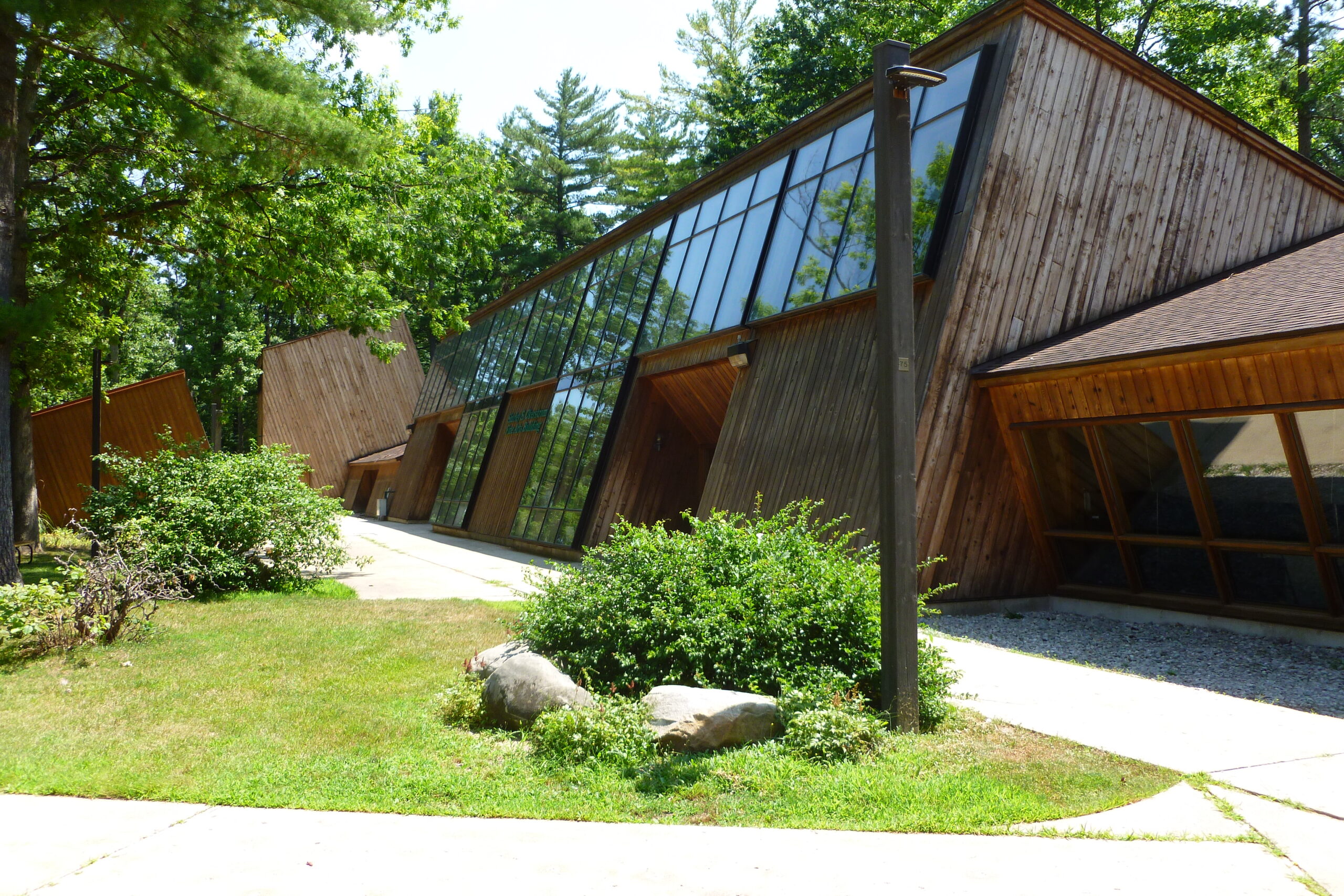
Beardslee who was in Cambridge on a summer sabbatical discussed the college's desire to construct a new fine arts building with Gallagher, and the two exchanged contact information. Gallagher and Norman Fletcher of The Architects Collaborative (TAC) visited the campus in the fall of 1968 and agreed to accept the commission. The first schemes presented to the college's building committee were rejected. These included designs for a cast concrete building and one that was made of brick and glass with cast columns. As the firm name implies, a number of architects collaborated on the project for TAC, eventually developing a design that included cedar-cladding for the exterior. For many reasons this seemed a better fit for northern Michigan. Still over budget, additional modifications had to be made to reduce the overall cost of the project, including using shingles for the roof instead of metal, and eliminating the thermopane windows for cheaper units.
Construction of the new building, one of only three structures on campus at the time, was completed in 1972. Although Walter Gropius is not listed as the architect of record many say that his influence is obvious. The Fine Arts Building is credited as being the last building that Gropius had a hand in designing before his death in July 1969. In 2000 the building was named in honor of Shirley S. Okerstrom, former member and chair of the NMC Board of Trustees and a supporter of the arts.